
BRICS countries account for 40% of global GDP, says India
Leaders to discuss resilience, innovation and cooperation at summit session

India stated that BRICS countries—Brazil, Russia, India, China, and South Africa—account for nearly half of the world’s population and contribute 40% of global GDP. The summit session will focus on fostering resilience, innovation, cooperation, and sustainability for inclusive global growth, alongside discussions on global governance reforms and international security concerns.
AI-generated · Verify with full article

See more of our coverage in your search results.

BRICS nations together represent about 49.5% of the world’s population and contribute 40% of global GDP, India said. The leaders are scheduled to attend an open session on “Resilience, Innovation, Cooperation and Sustainability: Shaping the Future for Inclusive Global Growth” at the Summit Hall at 10:50 am.
The BRICS grouping, comprising Brazil, Russia, India, China and South Africa, plays a significant role in the global economy. India highlighted that these countries together account for nearly half the world’s population and 40% of the global gross domestic product.
The summit session will focus on how resilience, innovation, cooperation and sustainability can shape inclusive growth worldwide. This reflects the bloc’s aim to foster collaboration among emerging economies and address global challenges collectively.
Restrictions are in place around the Arun Jaitley Stadium from 2 pm to 11:45 pm due to the India-Afghanistan T20 cricket match coinciding with summit activities. The event is expected to draw significant attention and participation.
India has emphasised the need for the Global South to become rule-shapers rather than mere rule-followers in international affairs. This includes equal participation in developing future technologies and governance frameworks in areas such as artificial intelligence, cyberspace, outer space, biotechnology and other critical technologies.
The current global governance structure was described as a pyramid concentrating power and decision-making at the top, with many nations affected but unable to influence decisions. India called for reforms focusing on representation, responsiveness and rule-making to create a more equitable system.
The summit also addresses concerns over growing risks of nuclear conflict and attacks on civilian infrastructure and peaceful nuclear facilities under International Atomic Energy Agency safeguards, highlighting the importance of international law and security.
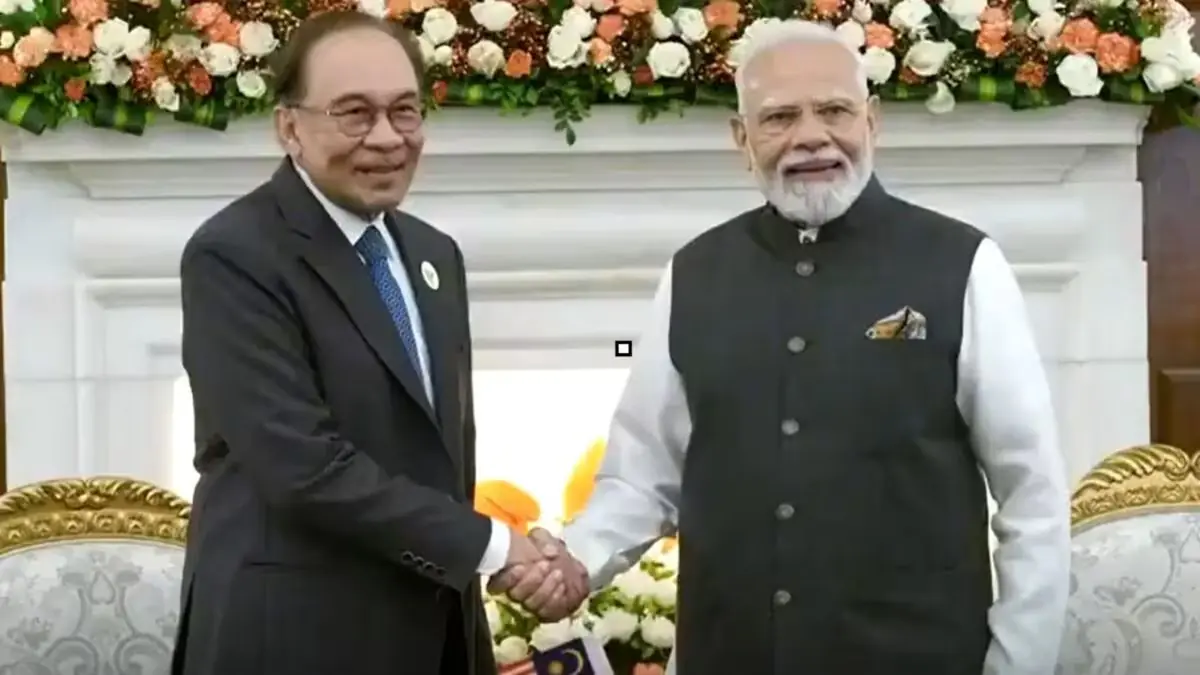
The absence of the Chinese President was noted in advance, reflecting the complex geopolitical dynamics within the bloc. Meanwhile, bilateral meetings among leaders are expected to continue, aiming to strengthen cooperation and address shared challenges.
अक्सर पूछे जाने वाले सवाल
- Why are there restrictions around Arun Jaitley Stadium during the summit?
- Restrictions are due to the India-Afghanistan T20 cricket match which coincides with summit activities, attracting significant public attention.
- What reforms does India suggest for global governance?
- India calls for reforms to enhance representation, responsiveness, and rule-making to make the global governance system more equitable.
- What concerns does the summit address regarding nuclear security?
- The summit highlights risks of nuclear conflict and attacks on civilian infrastructure and peaceful nuclear facilities, urging respect for international law.
- Why is the Chinese President absent from the summit?
- The absence reflects complex geopolitical dynamics within the BRICS bloc.
AI-निर्मित · पूरी ख़बर से पुष्टि करें
50 free articles left today
0 of 50 free reads used today.
Most read



Comments
0 threadsNo approved comments yet. Start the discussion.